Grocery prices rose 2.2%. Why your receipt may tell a different story
← Back to Youdle Grocery Brief
Grocery prices rose 2.2%. Why your receipt may tell a different story
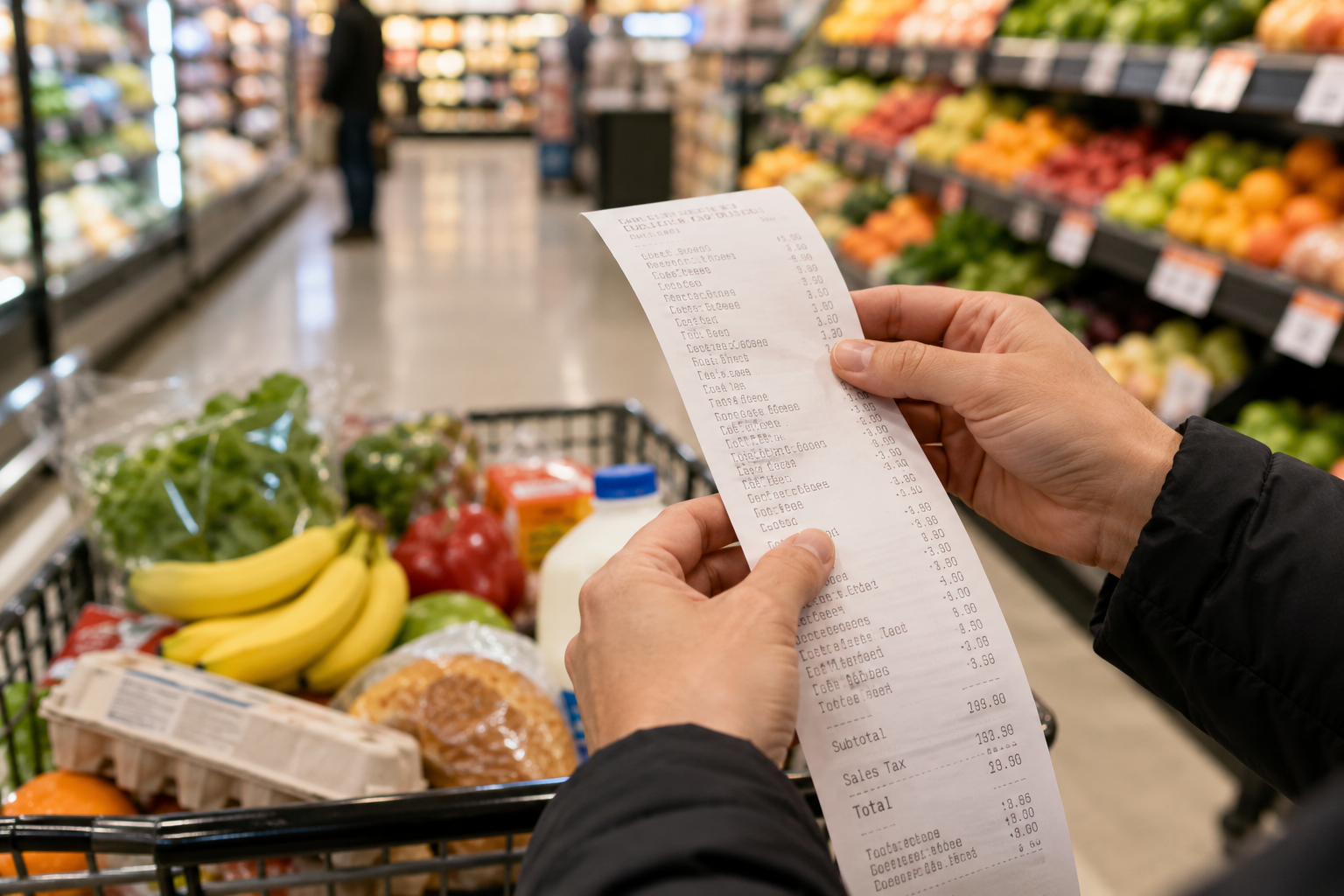
Your grocery receipt does not care what the national average says. You can leave the store feeling as if everything costs more, then hear that grocery inflation is cooling. Both experiences can be real. The USDA's September 2026 Food Price Outlook reports that grocery-store food prices were unchanged between July and August 2026, but were still 2.2 percent higher than in August 2025.
Here's the catch: that 2.2 percent describes a broad basket of food, not the products your family actually buys. USDA tracks 15 food-at-home categories. In August, average prices fell from the previous month in seven categories, rose in seven and stayed unchanged in one. The neat national number conceals a messy aisle-by-aisle reality.
Take eggs and cooking basics. USDA recorded a 3.5 percent month-to-month jump in egg prices and a 1.4 percent rise in fats and oils in August. If those were regular items in your cart, the unchanged overall monthly average may not match what you paid. Someone filling a different cart could have had an easier month. Neither shopper is imagining it.
That matters especially when your budget has very little wiggle room. A price increase on something you buy every week often stings more than a decrease on a product you rarely purchase. Instead of using one national percentage to judge your spending, look at the items you personally cannot skip and the ones you can substitute.
Four checks to make before your next grocery trip
Pick five repeat purchases. Record the exact brand, package size and price from your last receipt. Check those same products again on the next trip.
Compare the unit price, not just the sticker price. A larger package is not automatically the cheaper way to buy an ounce or pound.
Choose one practical substitute for two flexible items. For example, compare fresh, frozen and canned versions of a vegetable you already use, without assuming one will always cost less.
Ask whether a promotion actually saves money on your planned meals. A discount on food you will not use is still an extra expense.
There is also a difference between today's price and a forecast. USDA's September report predicted a 2.4 percent increase in average grocery-store food prices for 2026 as a whole. That is a national projection, not a guarantee for your neighborhood store, and it does not mean every product will rise by the same amount. USDA also publishes regional food-price data, another reminder that location and shopping habits matter.
Build your list around the products you truly need. You can begin with Youdle's grocery search to explore items, then compare the current package sizes and shelf prices at stores available to you. Keep the list realistic, and update it when prices change. Your goal is not to beat a national statistic. It is to make your own next receipt more manageable.
Source: USDA Economic Research Service, September 2026 Food Price Outlook.
Subscribe to the Youdle Newsletter
Grocery savings, price drops and recall alerts — straight to your inbox.

