Online + In-Store: How to Get the Best Deals Either Way
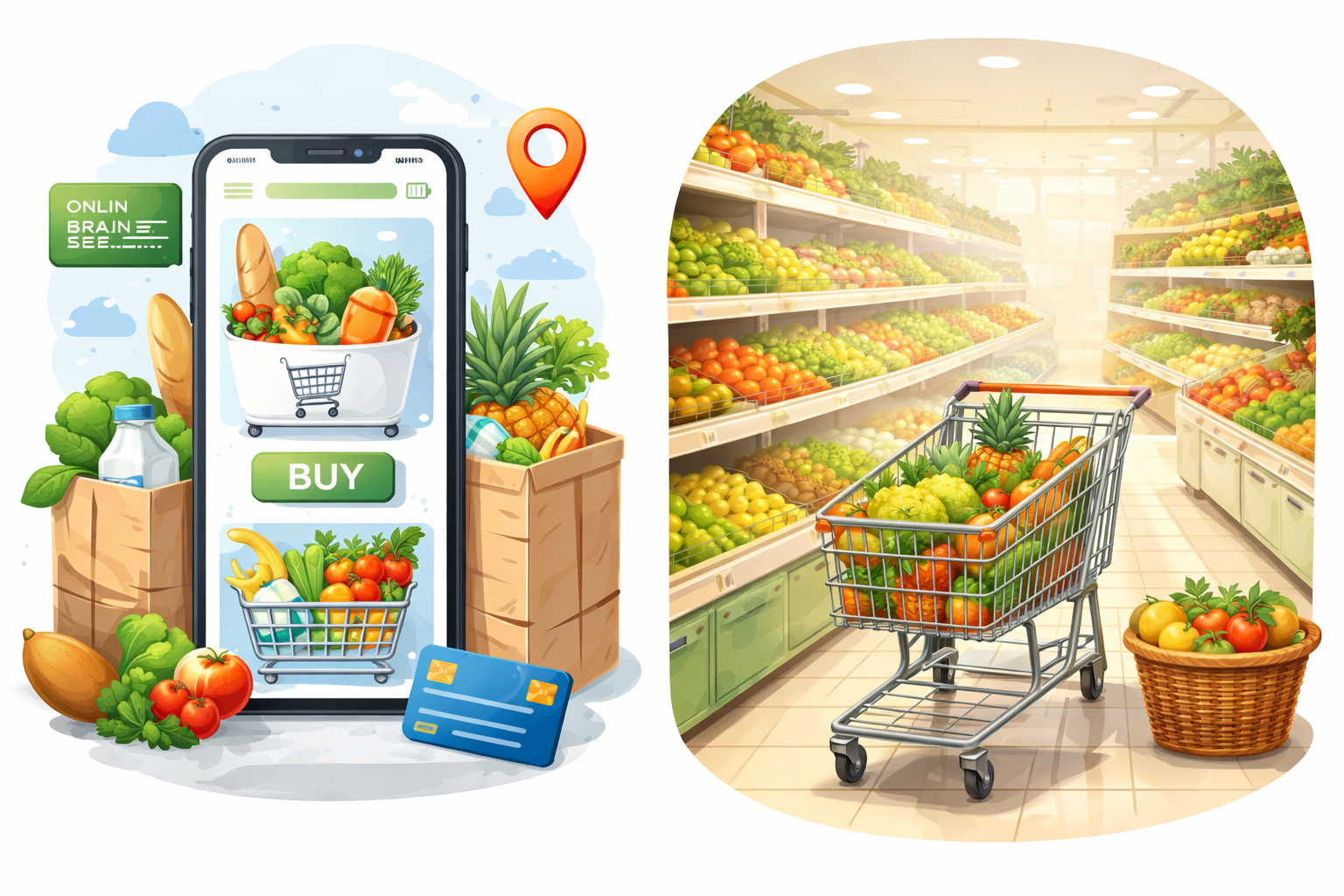
MEMPHIS, Tenn. (Youdle) – Online grocery sales just crossed $1 trillion globally in 2026. That's not a niche trend anymore—it's the default way people shop. And the question isn't whether you should go online or in-store. It's how to split your shopping between both and save the most money.
Hybrid shopping—splitting your cart between delivery, click-and-collect, and in-store shopping—is now the dominant pattern. According to retail research, online grocery sales exceed $1 trillion worldwide with growth running above 10% year over year. But here's what matters to your wallet: not every purchase should go online, and not every trip is worth the drive to the store.
When to Shop Online (Delivery or Click-and-Collect)
Bulk staples (rice, pasta, canned goods, frozen items): Buy online where you can compare prices across stores without walking around. Free delivery thresholds often make bulk buys cheaper than in-store.
Items on sale: Online platforms often show weekly deals and let you filter by price. You see the deal before you buy, not when you're standing at the register.
Items you always buy the same way: Milk, bread, eggs, standard groceries with no variation. No discovery needed—just reorder.
Heavy or awkward items (water, pet food, large produce): Delivery saves time and your back. The convenience fee is worth it.
When to Shop In-Store
Fresh items needing inspection (tomatoes, avocados, berries, leafy greens): You need to see and touch to ensure quality. Online quality is inconsistent for delicate produce.
Deli counter items: Custom slicing, prepared foods made to order, and last-minute meal solutions. The deli section can't match online quality or customization.
Products on deep discount or clearance: In-store markdowns happen faster than online platforms can update. You catch deals in-person.
Discovery shopping: New products, seasonal items, trending flavors. The physical store offers visibility that online platforms can't match.
The Hybrid Strategy That Saves Money
Create two shopping lists: one for delivery (staples, bulk, sale items) and one for in-store (fresh produce, deli, discovery). This approach reduces impulse buying and lets you compare prices strategically.
Use click-and-collect for heavy items and bulk purchases. You avoid delivery fees, get sales, and save time—no checkout lines.
Shop in-store once per week for fresh items and deli, then do a quick online order midweek for staples. This balances freshness with convenience.
Track your spending across both channels. Most shoppers find they save 15-25% by splitting strategically rather than going all-in on either option.
The Real Cost of Online
Delivery fees: $5-15 per order Minimum purchase thresholds: Often $35-50 Service fees: 5-10% on top of prices But: Free delivery over certain amounts, membership discounts, and exclusive online deals can offset these costs.
In-store costs: Gas, time, impulse buying (which accounts for 30% of grocery spending).
The math often favors hybrid shopping—online for planned purchases, in-store for what you can't replicate digitally.
What This Means Going Forward
Grocery stores are no longer just sales environments. They're discovery and freshness destinations. The stores that win are those offering freshness, selection, and speed that delivery can't match. Your role as a shopper: use each channel for what it does best.
Build customized shopping lists in our Youdle Grocery List Builder. Also, search for in-stock groceries at Youdle online and buy in-store.
Subscribe to the Youdle Newsletter
Grocery savings, price drops and recall alerts — straight to your inbox.

